“Let us not love in word, neither in tongue; but in deed and in truth.” 1 John 3:18
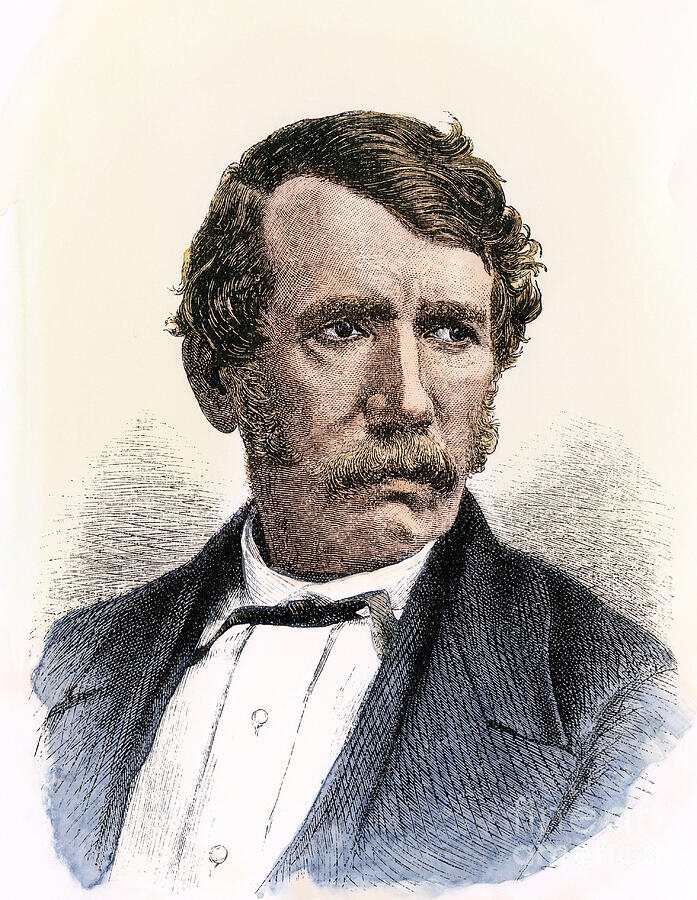
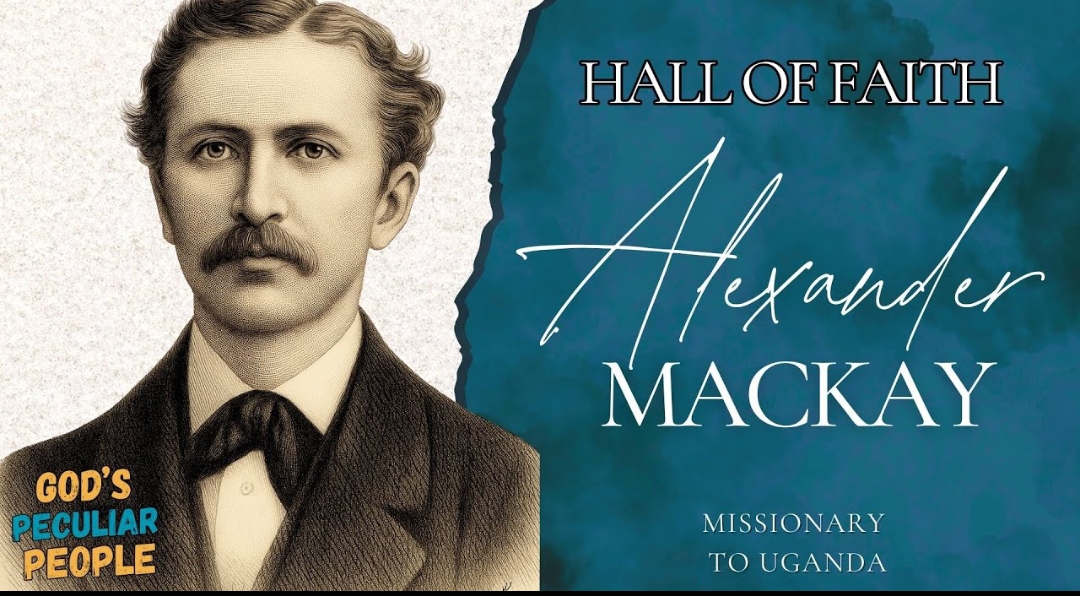
He was a Scottish engineer, not a preacher by training, studied mechanics, mathematics, drafting in Edinburgh and Berlin, and by every natural measure was headed towards a comfortable career designing machinery in Europe.
Then, in late 1875, he read a letter published from the explorer Henry Morton Stanley, describing a king in Uganda who was asking about the white man’s God and begging for a practical Christian who could turn his hand to anything. At 25, Mackay wrote back to the Church Missionary Society offering himself for whichever region was groaning hardest under what he called the curse of the slave trade.
Getting to Uganda nearly killed him before his work there even began. He set out with a party of eight missionaries in 1876. The journey inland from the coast broke most of them, leaving some died before reaching the interior, and others turned back.
Mackay himself contracted a fever hundreds of miles from the coast and nearly died, was carried back to recover, and then, once strong enough, built a 230-mile wagon road through the wilderness with nothing but a pick and an axe, finishing it in a hundred days. He did not reach Uganda’s capital until December 1878, over two years after he first set out, by which point he was one of only two survivors left from the original party of eight.
King Mutesa welcomed him, not primarily for his theology, but for his hands. Mackay built the king wells, huts, farming tools, and eventually a functioning printing press, and the Baganda people, astonished at what he could make, nicknamed him Mazunga-wa-Kazi, which means the White Man at Work. He used every ounce of that practical trust to translate the Gospel of Matthew into Luganda and to quietly and patiently teach the Christian faith to the young men who gathered in his workshop.
Then King Mutesa died in 1884, and his son Mwanga took the throne. Instead of appreciating the growth so far, he rather saw the growing and spreading Christian conviction among his own territory as a direct threat to his authority and what followed was the martyrdom of the Uganda Christians, which was one of the defining atrocities of 19th African mission history.
Dozens of young converts, many of which were boys Mackay had personally discipled in that same workshop, were executed for refusing to renounce their faith, and some were burnt alive.
Mackay watched people he had taught with his own hands die for the faith he had given them, and it did not send him home. It did not even slow him down.
When Muslim forces drove the remaining Christians out of Uganda entirely in 1888, Mackay simply relocated south of the lake to Usambiro and kept translating, kept teaching, kept building, surrounded by ongoing bloodshed, still hopeful, by every account of those who knew him, that a permanent Christian community in Uganda was possible.
He never went home. Not once.
The Church Missionary Society’s own committee minutes, recorded shortly after his death, noted that across nearly fourteen years of service, Mackay never once left the shores of Africa, which was an almost unheard-of level of sustained and uninterrupted presence for any missionary of his era, most of whom returned to Europe repeatedly to recover their health.
He simply stayed, through the deaths of colleagues, through the martyrdom of his own students, through two hostile kings, until fever finally caught him on the 4th of February, 1890, at Usambiro. He died four days after the first symptoms appeared, at forty years old, the last survivor of the original party that had set out with him in 1876.
His companions built his coffin from wood he had gathered for a boat he never finished, and Baganda Christians stood at his graveside singing hymns in their own language over the man who had taught them to read.
Mackay did not need to be a theologian to change a nation. He simply refused to leave, refused to stop building, and refused to let the martyrdom of his own students become the end of the story instead of the cost of it.
It is quite unfortunate that we have now built a kind Christianity in Africa that often treats ministry as a platform to be launched from rather than a post to be held. Mackay held his post for fourteen unbroken years, through the death of everyone who started the journey with him, and never once asked to be relieved of it.
Is there a post, a ministry, a place or a people, that God has actually asked you to simply not leave, no matter what it costs to stay?