“And they overcame him by the blood of the Lamb, and by the word of their testimony; and they loved not their lives unto the death.” Revelation 12:11
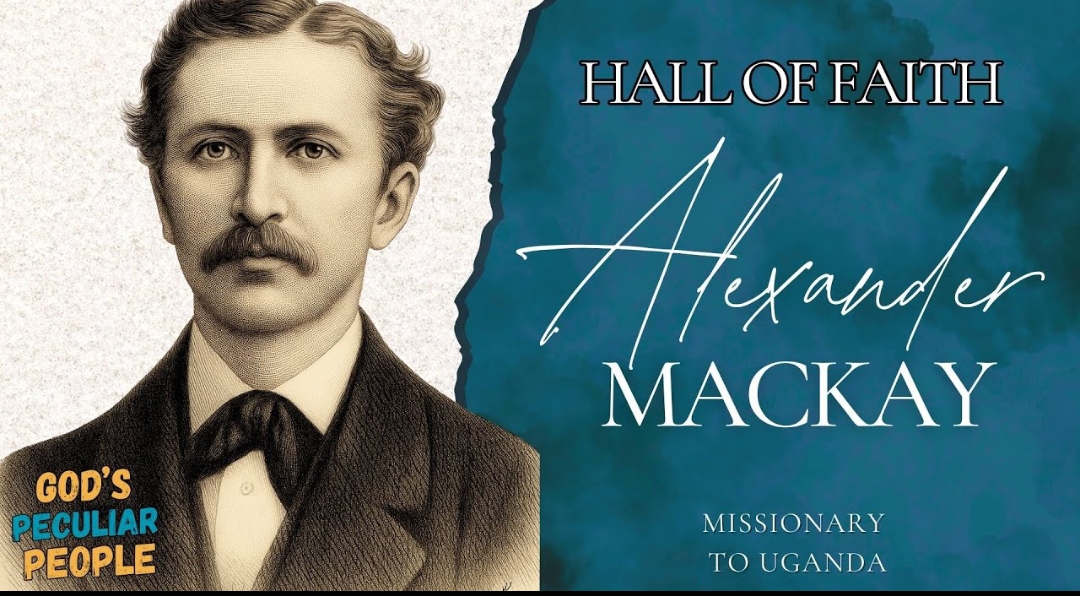
Yesterday, we looked at Alexander Mackay, the engineer who spent fourteen unbroken years discipling young men in his workshop in Buganda.
Today, we want to see what it cost the boys he taught.
Most of the Uganda Martyrs were pages in the royal court of King Mwanga II, young men, some barely into their teens, serving in the highest ranks of Buganda’s palace life.
When Mwanga’s father, Mutesa, died in 1884 and the eighteen-year-old Mwanga took the throne, he inherited absolute authority over every life in his kingdom, but what he could not control was the growing number of his own pages who had already become Christians under Mackay’s teaching and now are refusing to bow entirely to his will, including refusing demands from the king himself that their new faith would not let them obey.
Then the persecution began in November 1885, when Joseph Mukasa, a Christian leader in the royal household, was executed for pleading with the king not to kill a visiting Anglican bishop.
Mukasa’s death did not end the pressure. It only intensified it and on the 25th of May, 1886, King Mwanga summoned all his pages before him and demanded that every Christian among them step aside and formally deny Christ but not one of them did. What followed over the coming days was a forced march of some thirty-seven kilometers from the royal capital to the execution ground at Namugongo of young men chained together, several murdered along the road before they even reached their destination, while others were tortured en route in ways meant to break the resolve of the ones still walking.
Charles Lwanga, one of the oldest among them, understood what was coming and used what little time he had left to secretly baptize several younger boys who had only begun their instruction in the faith, making sure that whatever the king did to their bodies, no one in that column would face eternity unprepared.
One of the four he baptized that night was Kizito, who was only fourteen years old, frightened, and comforted by Lwanga’s own promise that if death came, it would not come to any of them alone.
On the 3rd of June, 1886, at Namugongo, the survivors of that march were burnt alive till death.
Contemporary accounts describe something almost impossible to reconcile with the horror of the act itself about boys and young men who spent their final hours praying, singing hymns, and encouraging each other to hold fast, choosing, with the fire already being prepared in front of them, not to recant. Thirteen were killed at Namugongo that single day; across the full persecution from 1885 to 1887, the number of Christians martyred under Mwanga were at least forty-five.
You’d think things should calm but no, the king’s fury did not stop the fire he lit from spreading, because within a generation, the Christian community in Buganda that King Mwanga had tried to burn out of existence had grown into one of the largest and most durable Church populations on the African continent.
The Anglican Church alone came to represent roughly a quarter of Uganda’s entire population by the close of the twentieth century.
Every June 3rd, millions of pilgrims now walk towards Namugongo, which was the same ground those boys were marched to in chains, to remember what their faith actually cost them.
I want you to be aware that these were not seasoned missionaries with decades of ministry behind them. Kizito was fourteen.
Most of the others were teenagers and young men barely into adulthood, freshly taught, newly converted, and given one chance to recant in exchange for their lives, yet they chose the fire instead, singing.
These kinds of stories are disheartening and they make someone like me very sad because of what we see in the kind of Christianity we have built over the years in Africa.
We have built an African Christianity where grown believers, decades into their walk with God, negotiate with far smaller costs than what these teenagers faced without flinching. They negotiate in the face of a little embarrassment, a little social awkwardness, a little inconvenience to have their comfort in place.
If you were a fourteen-year-old page in that court, freshly taught, everything still new and untested in you, would you have stepped aside with the Christians, or stayed silent in the crowd?