“I am ready to be offered, and the time of my departure is at hand.” 2 Timothy 4:6
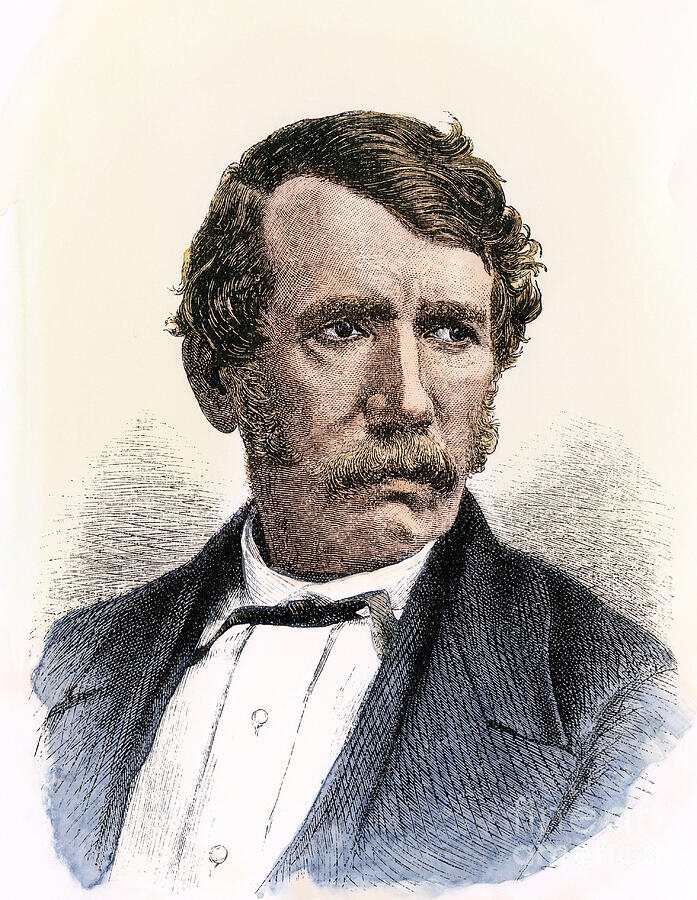
He was ten years old when he started work in a Scottish cotton mill, fourteen hours a day, six days a week, sharing a single tenement room with his parents and siblings and twenty-three other families in the same building. With part of his first week’s wages, a boy of ten bought himself a Latin grammar and that was the beginning of David Livingstone. Not comfort, not privilege, but a poor Scottish child who taught himself to want more than the mill had to offer.
He trained as a doctor, was ordained, and set sail for Cape Town in 1840, intending to become a missionary in China until the Opium Wars closed that door. Robert Moffat, a veteran missionary already working in Bechuanaland, changed his direction towards Africa instead. Livingstone arrived at Moffat’s mission station at Kuruman in July 1841 and pushed immediately further north than any missionary before him had gone, with the determination to find a population that is large enough to justify the work.
Now, this is something that almost no modern Christian knows about David Livingstone, the most famous missionary-explorer in history: by his own biographers’ account, in over three decades on the African continent, he is known to have personally converted only one African to Christianity who was a Bakwena chief named Sechele, and even that single conversion remained complicated for years afterward.
For ten straight years, Livingstone genuinely tried to be what every mission board expected of him such as a conventional station missionary, teaching school, tending a garden, building a chapel, preaching to whoever would listen. Despite all the labours, the harvest never came and his own father-in-law, Robert Moffat, after decades of labour at Kuruman, had fewer than forty converts to show for it, and half of those had already fallen away.
The personal cost stacked on top of the spiritual silence. In 1844, a lion mauled his left arm so badly that he had to fire a rifle from his other shoulder for the rest of his life. He married Mary Moffat in 1845, and she followed him into the harshest interior treks Africa had to offer, including a month lost in the Kalahari Desert with barely enough water to survive, during which their newborn baby died in her arms.
In 1852, after seven years of marriage spent mostly in danger and isolation, Livingstone finally sent Mary and their children back to Britain for their own safety, beginning years of separation that his own biographers count among the darkest failures of his personal life, a man so consumed by the work that his own household paid for it in ways he only fully regretted much later. When Mary rejoined him on the disastrous Zambezi Expedition in 1862, she died of dysentery within months, buried on African soil far from anything resembling home.
The Zambezi Expedition itself, meant to open commerce and Christianity into the continent’s interior, collapsed almost entirely, as the boats could not navigate the river, missionaries under his oversight died of fever in a swamp he had assured them was survivable, and Livingstone returned to Britain in 1864 to newspapers openly calling the entire venture a failure. His reputation, for a time, genuinely lay in ruins.
He went back anyway. In 1866, ill and increasingly isolated, he pushed further into central Africa than any European had gone, chasing both the source of the Nile and, more urgently, evidence of the Arab-Swahili slave trade he had come to despise more than almost anything else on the continent. He never found the Nile’s source.
He died on the 1st of May, 1873, in a mud hut in Chitambo village, in what is now Zambia, found kneeling beside his cot in the position of prayer.
His African companions, the men who had walked thousands of miles at his side, CUT OUT HIS HEART and buried it under a tree seventy miles from Lake Bangweulu, then carried his embalmed body on an eleven-month journey to the coast so his own people could receive it.
Britain gave him a state funeral in Westminster Abbey and the last openly operating slave market in Zanzibar closed the same year he died.
The most famous missionary in history spent over thirty years in Africa and led, by most accounts, exactly one soul to Christ. He buried his wife and an infant child on foreign soil, lost his reputation publicly, and never once found the thing he spent his final years searching for.
Why then do we have a Nigerian Christianity that measures a minister’s worth by attendance figures and testimony counts?
Livingstone’s life stands as the loudest possible rebuke to that math. His single convert did not make his life a failure. His faithfulness to a call that never produced what he hoped it would is exactly what made his life count.
Beloved, if you were guaranteed, right now, that your ministry would win almost no one visibly, would you still give everything you have to it?