“They have cast fire into thy sanctuary, they have defiled by casting down the dwelling place of thy name to the ground.” Psalm 74:7
Twenty-four years. That is how long Henry Townsend had given to Abeokuta by 1867. He arrived in 1843 to a warm reception from Sodeke, the Egba war commander, who told him his face resembled someone from a dream. Twenty-four years of schools built, a church established, converts discipled, and a printing press running the first newspaper Nigeria had ever seen, called Iwe Irohin, launched in 1859, printed in the Egba capital itself.
On 13th October, 1867, none of that mattered at all.
The trouble had nothing to do with the Gospel and everything to do with politics, which was a dispute between the Lagos colonial government and Abeokuta’s leadership over trade routes and taxation.
It was the case of a British governor who called an Egba ally a traitor, and a mission board in the middle that made the fatal decision to order its own schools and Churches closed as pressure in the political fight. Abeokuta’s response was not diplomatic but a mob.
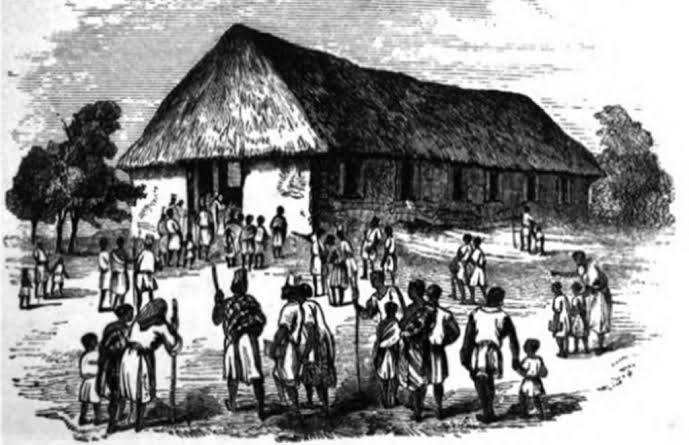
They called it Ifole (house-breaking). And that is exactly what it was. Crowds moved through Abeokuta destroying what twenty-four years had built. Mission houses were broken open and gutted. Churches were wrecked. Schools shut down mid-lesson. The printing press, the machine that had given Yorubaland its first written newspaper, its first taste of the printed word in its own language, was destroyed along with everything else. The target, deliberately, was the European missionaries and the physical evidence of their work, not the Nigerian converts themselves, but everything the missionaries had spent a generation building.
By the end of that day, the CMS Yoruba Mission’s headquarters, its grammar school, its training institution had to be pulled out of Abeokuta entirely and relocated to Lagos. Work that had taken decades to plant was uprooted in just one afternoon.
Now put this next to what you already know from yesterday. Sixty miles away, in Ibadan, that same wave of pressure came for David and Anna Hinderer. Abeokuta’s leaders pushed for Ibadan to expel its missionaries too, the same way they had just done to their own. Ibadan refused. The Hinderers were allowed to stay two more years before their bodies, not the mob, finally forced them out.
Here is the question we are asking today: what made the difference?
Not funding. Not strategy. Not even the missionaries themselves because the truth is, Townsend was every bit as devoted as Hinderer. The difference was what the local Church had actually become in each place. In Ibadan, something had rooted deep enough into the people themselves that the city chose to protect it, even under real political pressure to expel it. In Abeokuta, the work, however sincere, however sacrificial, had not yet rooted past the missionary himself. When the mob came, there was no local Christian community with enough weight to stand between the crowd and the mission house. This is the wound underneath the whole Ifole story, and it is a wound the modern Nigerian Church needs to sit with.
It is possible to build Churches, schools, even newspapers which can become visible, impressive, generational work, and still have it be a foreign structure that the community has not made its own. Ownership is not attendance. Ownership is what a people will fight to protect when the pressure comes.
Townsend did not quit. He rebuilt from Lagos. The Yoruba Mission survived Ifole and, in time, grew larger than before. But October 13, 1867, is proof that even the most sacrificial missionary work can be destroyed in an afternoon if it never became the people’s own possession.
Ask yourself:
Is what you call “your church” something you BUILT, or something you actually OWN?
If persecution, pressure, or simple hardship came for your local assembly today, would the surrounding community rise to protect it, the way Ibadan protected the Hinderers? Or would it fall the moment the missionary, the pastor, the founder, the “man of God” was no longer standing in front of it?
We have built a Nigerian Christianity that is enormous in buildings and attendance and almost invisible in ownership. Prosperity gospel thrives here for exactly this reason because it never asks anyone to own anything costly. It only asks them to show up and receive.
The Ifole is Africa’s own historical proof that visible success is not the same as rooted faith. Ask today: if they broke down your house of worship tomorrow, would it be a tragedy the community mourned, or a building nobody but the pastor really needed?
Think about it.