We ask a lot of questions in the Church about missions. We ask whether someone is called, whether a field is open or closed, whether a strategy is contextually appropriate, whether a translation is theologically sound and we even ask whether a Church plant is following healthy models of discipleship. These are good and necessary questions, but there is one question we almost never ask out loud, and I have come to believe that our silence on it is costing the unreached world dearly. The question is:
WHAT DOES IT REALLY COST TO REACH A VILLAGE?
Not in some abstract spiritual sense. In real terms. In naira, pounds, dollars and years. In the actual weight of what it takes to move the Gospel from where it is to where it has never been.
We usually avoid this question because it feels unspiritual to put a price tag on something as sacred as the Great Commission, but the truth is that, we avoiding the number does not make the cost disappear, it only means the cost will continue to go unmet, and the village will stay unreached.
So let me walk you through it, because I have lived inside this cost for over almost two decades of unbroken labour, and I think the Church needs to see it very clearly.
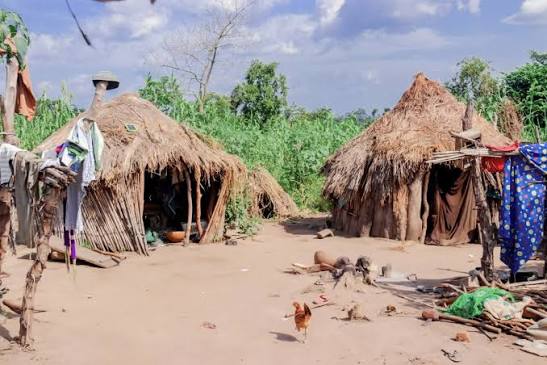
It always begins long before a single sermon is preached. A worker who is going to plant a Church among an unreached people group first has to be SENT, which means there has to be relocation and sometimes that means uprooting a family from everything that has always been familiar to them and moving them into a rural area with none of the infrastructure they’ve always been used to. No reliable electricity. No nearby hospital. No school system for their children that resembles what they grew up with. That relocation alone carries a cost which includes housing, transportation, and the basic furnishing of a life from scratch in an unfamiliar place.
Then comes language.
In many parts of rural Africa, the people we are trying to reach do not communicate in the national or trade language. They have their own tongue which is often unwritten, sometimes spoken by only a few thousand people.
A labourer cannot simply show up and preach. You must learn to listen first, sometimes for a year or even years, before you can speak the Gospel in a way that actually enters into someone’s heart rather than bouncing off as foreign noise.
That season of learning will usually not produce visible fruit. There might be no converts, baptisms or any Church plant to report but it always produces something the Church rarely wants to fund: patient PREPARATION, and during that entire season, the labourer still needs to eat, needs shelter, needs support, because the relationship-building that will eventually open the door to the Gospel cannot happen on an empty stomach or under the undue stress of unmet basic needs.
Then there is the actual work of presence.
Frontier missions is not a weekend campaign or a three-day crusade with a stage and a sound system and an altar call before the team flies home.
It is years, often a decade or more, of showing up, sitting with the people, earning their trust slowly, the way trust is always earned, through consistency and care rather than persuasion, building relationships with village elders who control whether outsiders are welcome at all, responding to the practical needs of a community such as giving them clean water, school for their children, basic medical care, and agricultural help, because the Gospel does not arrive disembodied from love expressed in tangible ways.
All of that requires ongoing, sustained funding and not a single gift but a continuous faithful stream.
And only after all of that such as the relocation, the language acquisition, the years of relational investment, does something we would recognize as a “Church plant” begin to take proper shape where a small group gathers, scripture translated for the first time into that community’s heart language, begins to be taught, leaders are identified and discipled, slowly, so that the Church does not remain dependent on the outside labourer forever but becomes something indigenous, self-sustaining, capable of reaching its own people and eventually the villages beyond it.
This is the actual economics of frontier missions.
RURAL MISSIONS TO THE UNREACHED IS NOT CHEAP, NEITHER IS IT FAST AND IT IS ENTIRELY DEPENDENT ON PEOPLE WHO ARE WILLING TO GIVE CONSISTENTLY, SACRIFICIALLY, AND WITHOUT THE IMMEDIATE GRATIFICATION OF SEEING FAST RESULTS.
I think about specific communities our ministry has worked to reach, places where the investment is stretched across years before a single indigenous believer is being gradually raised. I think about the seasons where funding was uncertain, where a worker’s continued presence in a village depended entirely on whether enough givers back home remained faithful month to month.
I have also watched what happens when funding falters – workers are forced to leave fields they had spent years cultivating relationally, communities left in a kind of spiritual limbo, having tasted the beginning of something real and then watching it go quiet again.
I have also watched what happens when the funding holds, when a community that had no Church, no Bible, no name for the God they sensed but could not articulate, slowly becoming a community with elders who can now teach the Word, with baptisms, with daughter Churches starting in neighbouring villages that the original missionary never even visited himself.
The unreached are not waiting for a better strategy because missiology has already given us excellent strategies, linguists have given us excellent translation methods, technology has given us tools that previous generations of missionaries could not have dreamed of.
Our challenge has never been strategy but it has always been funding the strategy we already know works. The unreached are waiting for a Church willing to fund one.
I want to address something directly here, because I think it matters: when you give towards frontier missions, you are not making a donation that disappears into administrative overhead and vague good intentions. You are funding a very specific, very real chain of cause and effect, of a labourer who is relocated, a language learnt, a relationship built, a Gospel preached, a Church planted, a generation changed.
The investment is not money disappearing into a void, but seed going into the ground that will bear fruit for generations which you may never see in this life, but fruit that exists nonetheless, multiplying in villages you will likely never visit, among people whose names you will never know until eternity introduces you to them.
So I ask you again, the question we so rarely ask: what does it cost to reach a village?
It costs more than we are comfortable admitting and it is costing the unreached far more, their entire lives, without ever hearing the name of Jesus, when the Church decides that the question is too uncomfortable to ask, and too costly to answer.
Grace to you!