“Yea, and if I be offered upon the sacrifice and service of your faith, I joy, and rejoice with you all.” Philippians 2:17
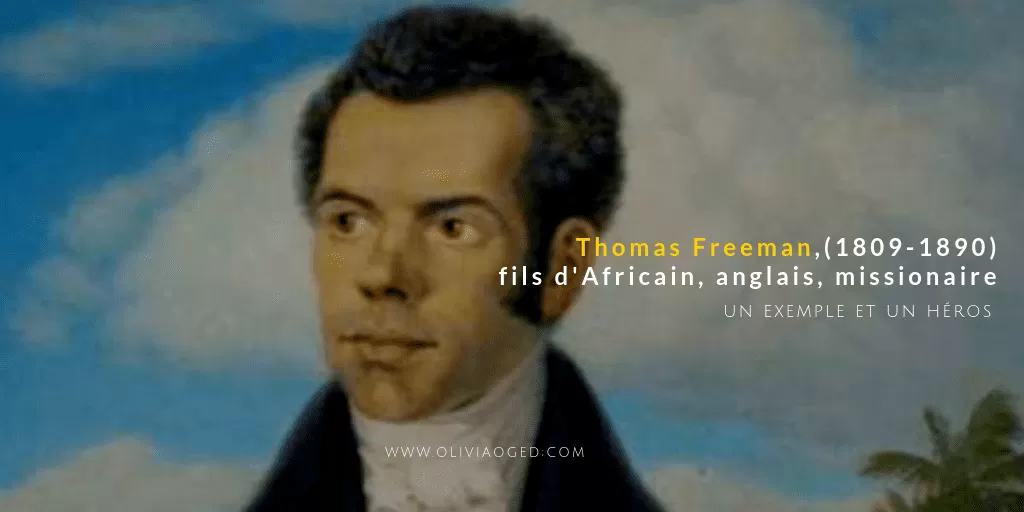
He was the son of a freed African father and an English mother, born in 1809 in a small village in Hampshire, England, belonging fully to neither world by the standards of his time, and somehow called by God to open doors in both.
Before he was ever a missionary, he was a gardener and a botanist, working in an English estate and nothing about his early life suggested he would become the man who cracked open the Gold Coast, Badagry, Lagos, and Abeokuta to the Gospel almost single-handedly.
He sailed for the Gold Coast in 1838 with his young wife, Elizabeth who died not long after they arrived but Freeman remarried, then his second wife did not live long either.
These were already two funerals from two marriages, on foreign soil, before his mission work could even produce anything close to what history would eventually credit him with. He kept going on with the work and made sure personal tragedy on this scale did not slow him down.
On the 24th of September, 1842, Freeman’s ship, the Queen Victoria, anchored off Badagry, a town built on the slave trade, hostile territory for anyone carrying a Bible. He preached the first Christian sermon ever heard there, under an Agia tree on the beach, and within weeks had a mission house and chapel standing where none had existed before. He did not stop at the coast.
On the 11th of December, 1842, he pressed further intoAbeokuta itself, which was the same city we shared about on Day 2 and also Day 3, arriving at the personal invitation of Sodeke, the Egba war commander, and was received with celebration by a king and his people who had never seen a missionary before.
Freeman did not treat inland danger as someone else’s assignment. He accepted an invitation from King Gezo of Dahomey, the traditional enemy of the very Yoruba people he had just evangelized, a king whose kingdom was built on slave-raiding and human sacrifice.
Freeman went to Gezo’s court twice, in 1843 and again in 1848, hoping to persuade a man who ruled by conquest to abandon slavery and stop the ritual killings that defined his throne but he failed both times because Gezo never changed but Freeman went anyway, twice, knowing the odds, because the alternative was leaving Badagry and Abeokuta permanently exposed to a war he might have been able to prevent.
For nearly two decades he crossed and re-crossed this ground, from Gold Coast to Badagry to Lagos to Abeokuta to Kumasi to Dahomey and back while he kept on planting, organizing and training the local preachers like William de Graft who would carry the work forward and by 1854, the Church had grown enough to need real structure, and Freeman was elected as the chairman of its circuits.
And then, the way these stories often end, like we had with Bishop Samuel Ajayi Crowther, the very organization he built began to move past him. In 1856, William West succeeded him. In 1878, the Methodist Synod formally split his life’s territory into two separate districts, handing leadership to other men. The pioneer who had personally opened three nations to the Gospel lived to watch the work get reorganized without him at the centre of it.
He did not fight it but kept serving, kept writing a journal of his travels, and a semi-autobiographical account of the mission enterprise, until his death in 1890, at eighty years old, on the same Gold Coast where he had buried two wives half a century before.
Freeman opened doors in territories that had killed missionaries before him, buried two wives in the process, walked twice into the court of a slave-trading king knowing he would probably fail, and still lived to see his own life’s work reorganized by people who came after him.
We have unfortunately built a Nigerian Christianity that treats personal loss as proof that God has withdrawn His hand and that quits the moment grief or failure enters the story. Freeman buried two wives and kept walking towards Dahomey anyway.
Beloved, if the mission cost you what it cost Freeman, would you still call it worth it or would you stop after the first funeral?
Think about it!